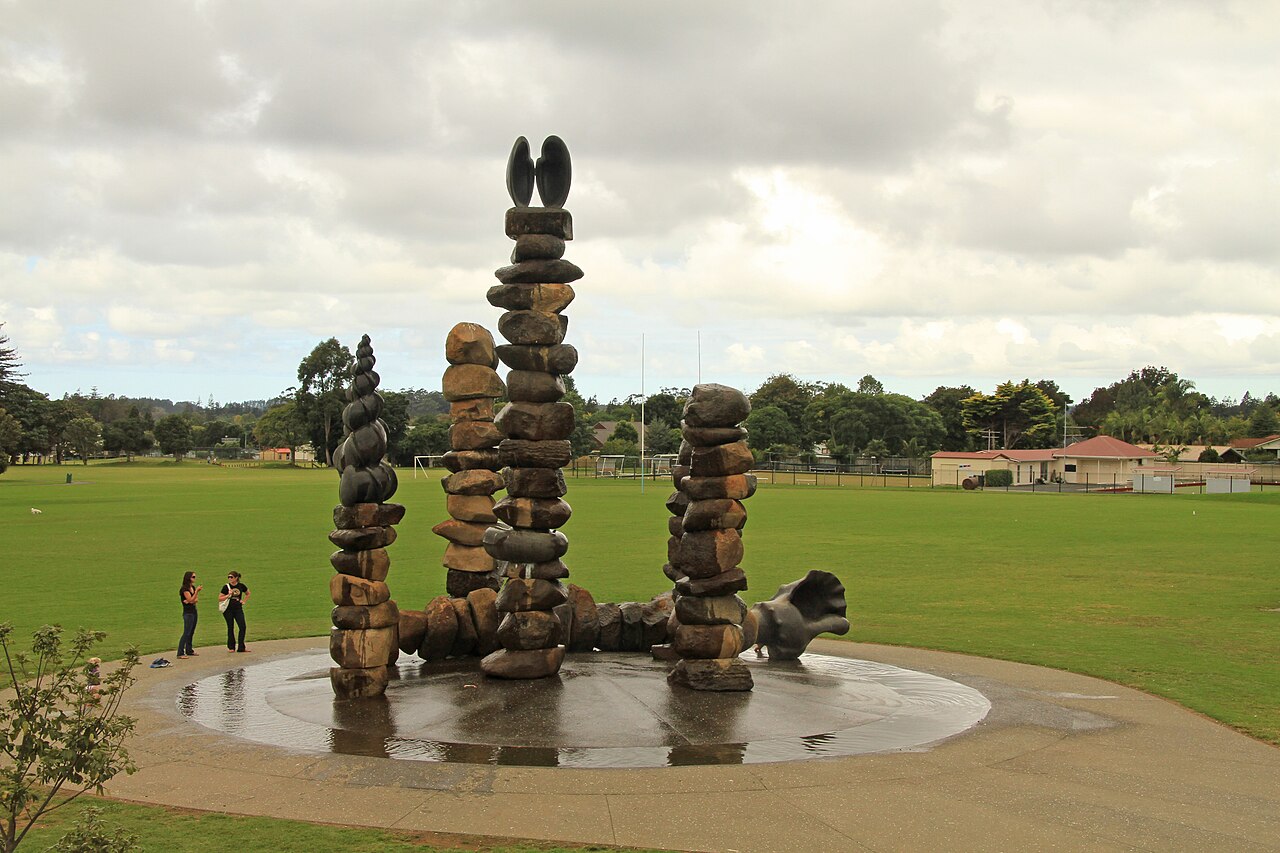
Te Whiringa o Manoko, a stone sculpture and water feature in Kerikeri. Source
Description
A stone fountain can combine basins, spouts, figures, channels and flowing surfaces. Water movement, sound and reflected light contribute to its appearance. The stonework is designed with a circulation system and the surrounding garden or architecture.
History
Fountains belong to longstanding garden and architectural traditions. In contemporary sculpture, Isamu Noguchi’s Water Stone of 1986 uses carved basalt and a bed of river stones to join a flowing fountain with an abstract garden.
Commissioning
The agreement should identify who designs and supplies the circulation, reservoir, plumbing and maintenance access. The intended flow, splash, finish and seasonal care should be discussed. An existing historic fountain also requires consideration of its surviving stone and mechanism.
In the Atlas
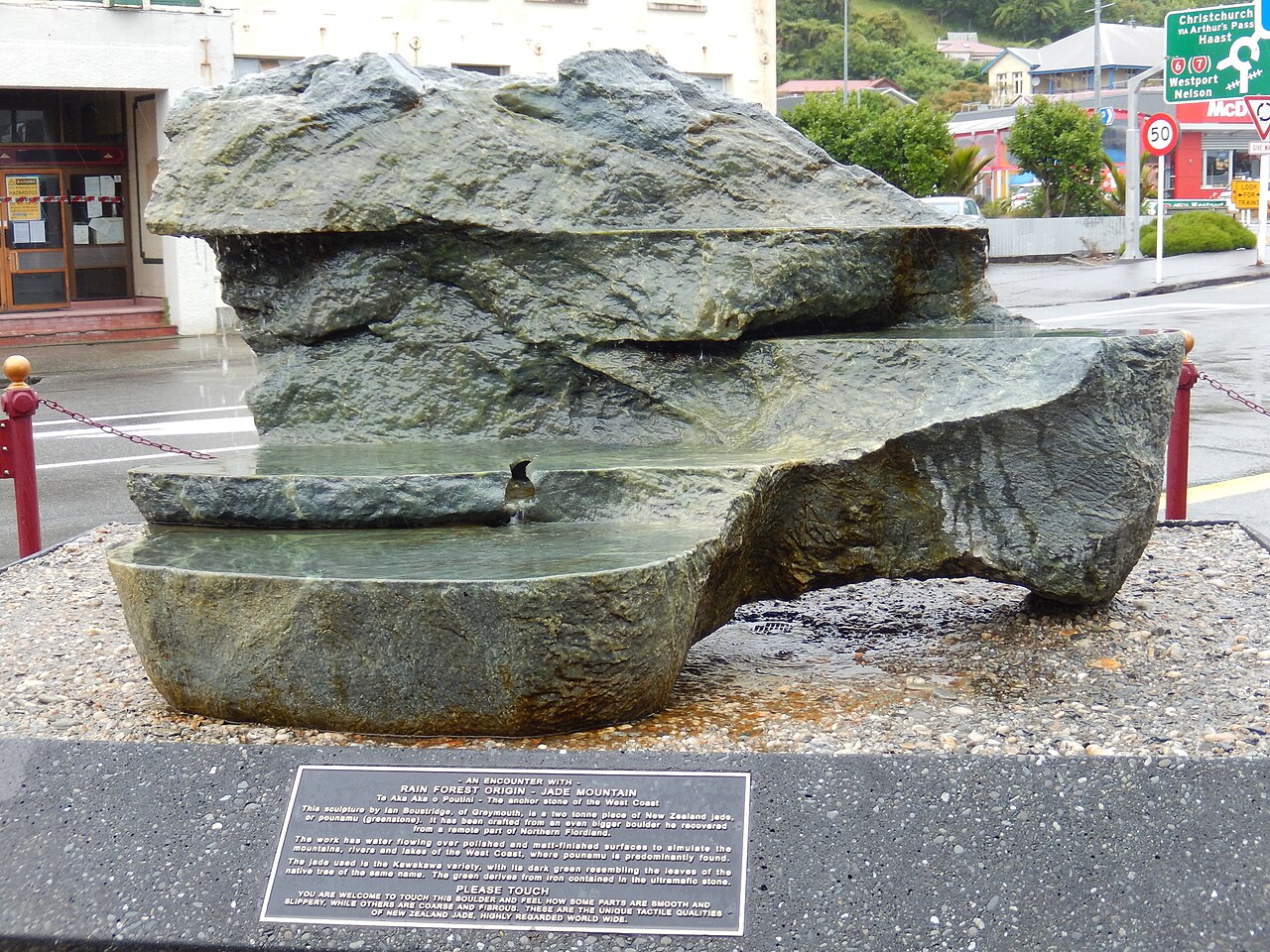
Greymouth pounamu sculpture
Stepped pools carved into a pounamu boulder guide running water across smooth green channels, contrasting with the rough stone left around their edges. Its materials include Jade.Its disciplines include Sculpture.Related services include Fountains and Public monuments.
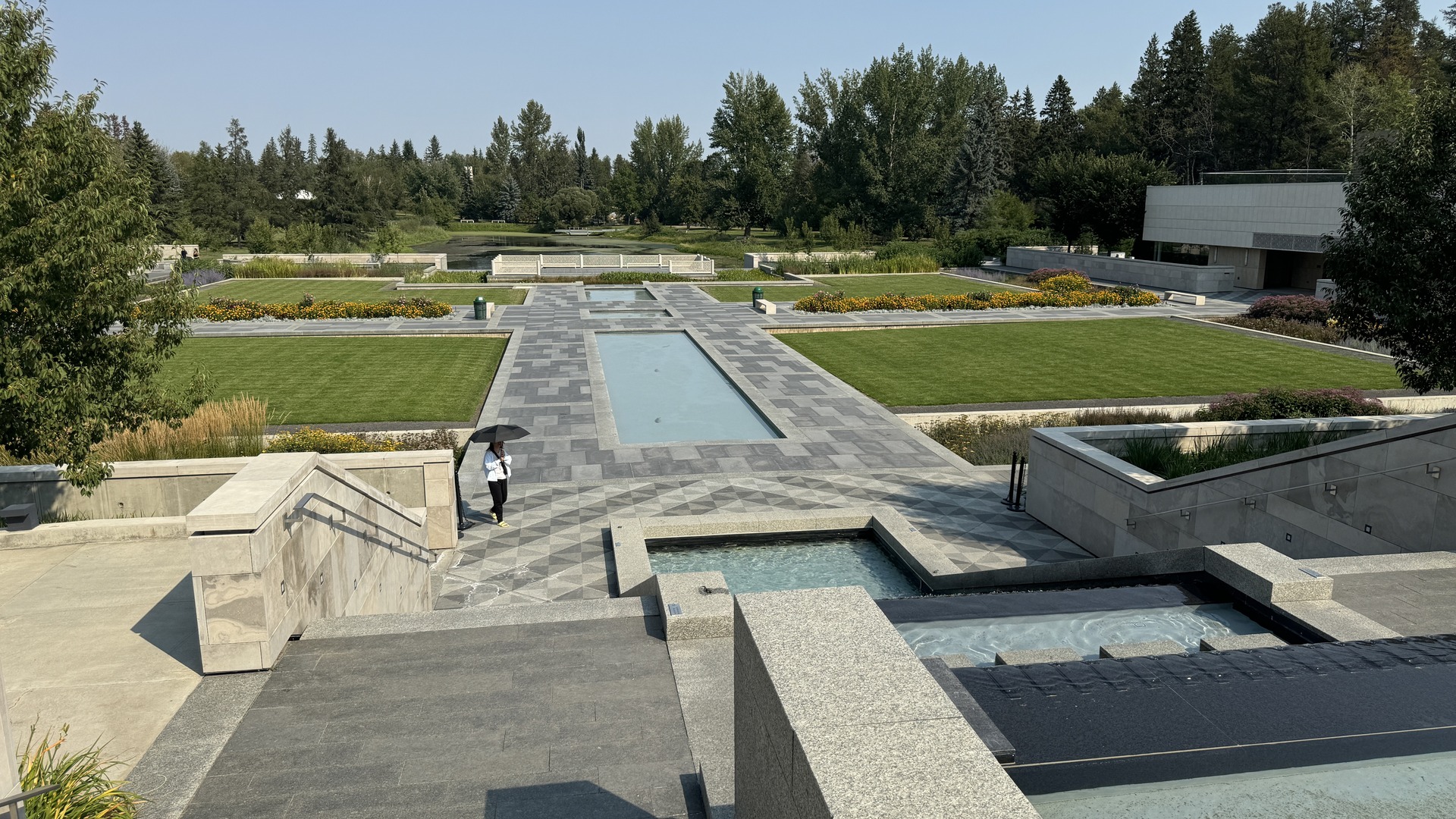
Landscape design: Nelson Byrd Woltz Landscape Architects. Garden architecture and engineering: DIALOG. Fountains: CMS Collaborative Inc. Civil engineering: ISL Engineering and Land Services. Diwan pavilion in background: AXIA Design Associates, Arriz + Co. and Kasian. Masonry fabrication and installation: Scorpio Masonry. Stone supply: A. Lacroix Granit. Photograph: Jason Woodhead, “University of Alberta botanical garden near Devon Alberta”. Photo source | CC BY 2.0 | Resized proportionally; full frame retained. | Project team — Nelson Byrd Woltz